Pages

Showing posts with label retro review. Show all posts

Thursday, 1 December 2011

Retro Review: Super Mario Kart

Lewis Terry has contributed a number of times on 8-Bit Girl, through me interviewing him on a variety of iPod games, to creating the pixel graphics seen throughout this blog. To increase the load on 8-Bit Girl (and to help me out on occasions), Lewis has offered to send me a few posts occasionally.


This post is a retro review, which we originally posted up on Retro Kingdom. As that blog is closing, as sadly we do not have enough time to update it, all of our reviews will be published up here for you all to read. I hope you enjoy his work!


Retro Review: Super Mario Kart
Written by Lewis Terry


The Super Nintendo Entertainment System (SNES) was where my childhood gaming addiction started. Before then, I had access to other games platforms, but none grabbed me as much as the SNES.  I had many favourites back in the day but one that stands out strong is the original Super Mario Kart. 

It seems common place now to have game characters star in other spin off games, such as sports or beat-em ups, however back then you would never have dreamed of it.  So imagine you are a six year old boy who loves the Mario games and you suddenly are presented with a game where they are all placed in super fast go-karts, it is a kids dream come true.

This is not saying that the game is only appealing to kids.  While it is presented in bright colours and all of its its protagonists are all cute characters, the game is highly addictive and presents some of the deepest game play and strategy that was offered on the SNES. 


Mario Kart sold over eight million copies worldwide and held the title of Nintendo's highest selling game on the SNES. Some feat, huh?

The game allows you to play one of eight characters from the Mario Brothers universe, each one possessing slightly different abilities.  You can either race against the computer or go head to head with up to three friends via a split screen mode, racing or duking it out in a battle arena, where players fire various objects at each other.

Like most games of it's time, Super Mario Kart is a hard game to master.  In order to pass the 150cc cup against the computer, one must learn all the short cuts, techniques and player attributes.  You have to learn how to powerslide and when to jump, and the best time to use those devastatingly satisfying red shells.  After many hours of investment, you will find yourself skimming water and pulling off feats you thought were impossible, only to still be beaten by the computer.

The graphics in Super Mario Kart are by todays standards dated, however they are probably the best example of Mode-7 on the SNES.  Despite all of the sprites on the screen and the frenetic action the graphics all stay nice and smooth, without flicking or clipping out.  The racers are animated wonderfully and have a nice amount of expression, when dazed or victorious they pull rather amusing faces.  But the main draw of the game graphically is the rich race tracks, their hazards and backgrounds.  From the cactus like enemies, to the Thwomps and the amazing but harsh Rainbow Road, the graphics are simply superb and are some of the best the SNES had to offer.
Like all classic Nintendo games, Mario Kart's sound was amazing and well thought out.  The audio in conjunction with the various sound effects all make the games atmosphere complete.  The background music is in part revamped versions of existing Nintendo music and part new creations, yet they are all distinctive and crisp in their own right.  No matter how relaxing the track may be when the final lap begins the music speeds up, suddenly making the game far more intense. Whether it is the background music, the coin sound effects or hearing the triumphant cries of the characters you can hear the quality of the audio.  So clear is the audio that it is always possible to distinguish one characters yell from another even if they are not on screen.
To most kids nowadays all of this will seem like old hat, yet it was Super Mario Kart was what layed down all of the foundations that modern novelty racers build upon.  Others may see the features offered as mundane or boring, yet still to this day if you pick up a controller and give it a spin, it retains the same addiction and charm as it offered back then.  There is a reason that this game sold eight million copies world wide and that is due to the games innovation and charm.

While there is no need to go out and get a copy immediately, as the newer versions of Mario Kart do the same thing, Super Mario Kart is an important piece of not only Nintendo's history, but of gaming history in general.


Thursday, 24 November 2011

Retro Review: MediEvil

Originally released near Halloween in October 1998 (a rather fitting date for the games subject matter), MediEvil tells the tale of of a deceased knight (the noble Sir Dan) as he fights to rid the land of Gallowmere of the evil Zarok and his undead army. 


Sir Dan is definitely a hero gamers can root for. He's the underdog-the knight who dreamed of being regarded as a hero by his peers. Unfortunately though, Sir Dan fell in the line of duty at the beginning of the battle against the evil wizard Zarok. Thankfully, MediEvil allows Sir Dan to have another chance at gaining this renown, after Sir Dan is resurrected to battle Zarok, who has returned once again. As a player, you can definitely feel the excitement as you inch Sir Dan ever-closer to being regarded as a true hero. As a consequence, the storyline is one of the strongest parts of the game. 
To me, MediEvil is a cross between the gameplay of Ghosts 'N Goblins, and the gothic but fun aesthetics adopted in Tim Burton films, most notably The Nightmare Before Christmas. Being a huge fan of Tim Burton's work, I feel that this is why the game has stuck by me for so many years, and why I also have such fond memories of playing through it. 


The game involves collecting and using a variety of weapons to hack through a hoard of creatures. Although hacking and slashing makes up a large amount of the game, MediEvil is punctuated with puzzle sections, each unique to the last. It makes for a nice change, and stops the game from becoming too repetitive and as a consequence, boring. There is also a chance to upgrade weapons by visiting gargoyles or opening treasure chests, and collecting items throughout the levels. Once a certain number of enemies are obliterated, a chalice can be gained which gives you access to the Hall of Heroes, a place where heroic ghosts give Sir Dan special weapons or items on each visit, which is a nice incentive to keep playing. 
Unfortunately every game, even the supposed "perfect" ones, suffer from a flaw or two, no matter how great or small it may be. In MediEvil, it is firstly, the camera positioning. This is a common problem in this genre, and in this game, the perspective has to be shifted regularly in order to get a better view of the surroundings. Secondly, some may find the idea of repeatedly hacking and slashing through levels little tiresome, but if you're after a light-hearted, no-brainer hack and slash game, then look no further than MediEvil. 


On face value, MediEvil lacks innovation, as it adopts the straight forward hack and slash platformer that we have seen many times before. However, the puzzles are a joy to complete, and the cartoon-gothic style is a pleasure to look at. MediEvil triumphs the most in it's goofy, humorous and engaging story and great, spooky looking visuals. The mix of unique levels and puzzles also add a substantial amount of diversity to the proceedings. The game is let down somewhat by the frustrating camera controls, but on the whole, this platformer is great fun. 

Sunday, 20 November 2011

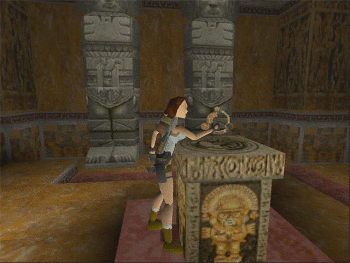
Retro Review: Tomb Raider


1996 marked the début of the Tomb Raider franchise. Combining Indiana Jones style artefact collecting with clever puzzles and platform sections, perhaps the selling point of this early Tomb Raider release was the inclusion of an athletic heroine named Lara Croft.

Originally released on the Sega Saturn, Tomb Raider was shortly ported onto the Playstation 1, which marked the rapid increase in popularity for the game. If you recall back to 1996, the gaming world was going mad with Lara Croft fever. Not only was she one of the first women in gaming to achieve this level of popularity, but the success of the original Tomb Raider spawned an impressive number of sequels, whilst turning Lara Croft into a worldwide, multimedia brand name. Lara made it onto a series of Lucozade adverts, plenty of merchandise, and most definitely, on many male gamer's walls. 
It's fair to say that Tomb Raider was influential-it paved the way for many 3D action/adventure games that have followed since, and we can thank Tomb Raider for the increase in female protagonists in games since Lara Croft first back-flipped her way onto the scene. Anyway, I digress. The point is, Tomb Raider is worthy of being seen as a classic, due to the influences it had in the gaming world, and Lara is still seen as a major video game icon over 15 years later. Pretty impressive, huh?

As previously mentioned, in Tomb Raider you play as Lara Croft, an upper class English adventurer who has her hands on her own extensive mansion, complete with her own butler. Living the life of luxury quickly gets boring for this adrenaline seeker, so she takes up the offer to retrieve an artifact for a wealthy American named Larson. However, not all is as simple as it seems. It turns out that Larson has turned his henchmen against Lara, thus forcing her to retrieve not one but three artefacts that have been hidden in tombs around the world. 
And so the game begins. Lara travels through a variety of destinations, including exploring Egyptian tombs, plundering mysterious Greek temples, and even taking a trip down to Atlantis. This game seems to cover many of the myths and "seven wonders of the world" that we are familiar with, but the ability to explore them through Tomb Raider is an excellent experience.

Like any platformer, each level brings different bosses and normal enemies. Of course, these enemies are themed for their location, so, for example, a Jurassic-like setting brings Lara up against a gigantic Tyrannosaurus Rex (one of the games stand-out moments), whilst typically, the Egyptian level features mummies and Sphinxes. 
Lara combats these enemies by shooting with two revolvers. More guns, such as the Uzi and shotgun, can be picked up throughout the game, whilst the ammo for each weapon can be stumbled upon along the way. However, what makes Tomb Raider so different from many games available around the same time was the exploration and acrobatics that Lara adopts. Each level has a series of switches, levers, ropes or objects to interact with, which Lara must press before progressing to the next stage. Of course, as many Tomb Raider fans will appreciate, this is not an easy task. In order to complete a puzzle, Lara must navigate her way around a series of obstacles. This is where her gymnast expertise comes into play. Players will instigate death-defying jumps, abseil, dive from huge  heights, and swing from rope to rope in order to get to each piece  of the puzzle. 

Whilst jumping around and working out the puzzles may seem like the most enjoyable aspects of the game, they can also be some of the most frustrating. Completing a puzzle only to fall awkwardly results in Lara dying in a crumpled heap. Nine times out of ten this results in having to re-complete the puzzle, and believe me, the puzzles on offer are not simplistic. 

At the time, Tomb Raider hosted some breakthrough graphics, with unique gameplay which has since then spawned a host of similar games. The creepy undertone, teamed with some exhilarating and intriguing gameplay makes this a true winner. If you can put up with the occasional frustrating puzzle, then this is definitely worth a go. 

Retro Review: Smash TV


Originally released as an arcade game in 1990, Smash TV has since been ported onto the SNES, Playstation, Xbox and Xbox 360. 

The game borrowed heavily from the themes in the film Running Man, and involves players competing in a heavily violent game show, set in the then future of 1999. Players make their way through a variety of rooms, where they must defeat a swarm of enemies in each room before they are allowed to progress. New weapons, power up items and bonus prizes drop throughout, which the player must try to collect at the same time as defeating enemies from each side of the room. 
One of the Boss battles
Boss fights crop up after a set amount of levels, which can all be defeated by simply firing constantly at them. Smash TV's gameplay is actually extremely challenging. Enemies come in the form of frantic hordes which can easily smother you if you do not keep the quota down in due time. The original version of the game, and the SNES port does not allow for continues, so expect to see yourself dying and re-trying from the beginning of the game an awful lot. The later ports are much more forgiving, and allow for either a set amount of lives, or an unlimited amount. This makes the game far less challenging, but the enjoyment factor is definitely still there.

Smash TV is a highly entertaining but very challenging game. The enemy types are varied and add a new challenge (eg. one enemy type explodes, spreading shrapnel in all directions), but the gameplay is pretty much the same throughout. Each level reminds you to avoid shrapnel,bombs and enemy attacks, whilst gunning down the substantial amount of enemies. Progress to the end, beat a boss, and claim your cash prize!
"Good luck...you'll need it!"
Smash TV allowed for a multi-player gaming experience, and this is where the fun most definitely comes in. Going in with another player helps to prevent you from dying so much. Players can co-operate on each level, in the sense that they are lightening the enemy load between them, but the competition lies in how many bonus items they can pick up, and ultimately, how many enemies they  shoot down.

The games graphics are very impressive, and I feel that they still hold up in today. The game show setting is vibrant and grand-looking, and the developers have really created some intriguing looking boss characters. One thing I distinctly remember about Smash TV is the music. The tv show theme music is catchy, and really adds to the exciting atmosphere created in the TV studio design. The dialogue borrows lines from the 1987 film RoboCop, thus acting as some sort of slight homage to this popular movie. My only criticism is that looking back on this game now, the music and dialogue seem a little muffled in comparison to the sound effects. However, this is only a minor observation, and does not dampen the games enjoyment.
Overall, Smash TV is a hugely memorable game. The game has a very high difficulty, which was probably done to not only give some sort of challenge to more experienced gamers, but I guess to encourage them to keep pumping coins into the arcade machine. Smash TV is much more enjoyable when played with a second player, as competing against another player for the highest winnings seems, at least to myself, more fulfilling than shooting through it solo. Smash TV is definitely a classic that I still like to play through. With a wingman, that is. 

Saturday, 19 November 2011

Retro Review: Aladdin


Anyone who knows me well enough will know that I have a love of Disney films. Aladdin has been my favourite ever since it's theatrical release in 1993, and you can imagine my delight at receiving this as my first ever personally owned SNES game at 6 years old (the rest were my Dad's at this time). 


Developed and published by Capcom, this Super Nintendo version is completely different from Sega Genesis version released at the same time. Whilst the Genesis version focuses on combat swordplay, the SNES version is much more focused on typical platforming elements. Fighting a string of guards with a scimitar has been avoided here. Instead, players can collect apples to throw at guards, and repeatedly jump on their heads to defeat them. 

The game closely follows the events and settings seen in the Disney film, but like most game adaptations, the occasional change has been adopted to the story, in order to flesh out the game with more levels. In Aladdin, this is a welcome addition, as the non-familiar levels (such as the surreal world which acts as the Genie's "Friend Like Me" segment in the film) are incredibly fun. Occasionally, the jumping is a little tricky to master, and the Genie's level will cause some temporary frustration while you get to grips with it, but in general, the game play offered by Capcom is solid. 


One great addition to the game was the bonus mini-games that could be unlocked at times. If the player manages to catch a golden scarab, or collect all the diamonds on a particular stage, they will be transported to a mini-game involving the Genie and a wheel. Spin the wheel and you will be granted whatever it falls on (eg. an extra life, more apples, etc). Sometimes the title screen will change depending on how much you have collected throughout the levels. 
The boss battles are well thought out, with the final battle against Jafar (especially the section with him in his snake form) is well animated, and makes for riveting play. The sound is also worth noting. Capcom have faithfully re-created two of the songs from the film- A Friend Like Me and A Whole New World, as well as adding in a 16-bit score that fits well with the feel of the film. 


Unfortunately like most games, Aladdin does carry a few flaws, but thankfully these are small. Firstly, the game is very short, and can be completed in a few hours. Whilst this is not necessarily a bad thing, I've completed this game several times now and still yearn for more at the end of it. 

Another problem I had is that the game can be incredibly challenging and unforgiving at times. Even on the easiest difficulty, the game still has it's sticking moments. But what are these moments exactly? Well, it all boils down to the jumping. I do like a bit of a challenge at times, but not timing a jump correctly once again does get a little frustrating. Many jump sequences can be avoided by finding and using the parachute. Sadly if you mess up, the parachute does not appear again when you re-spawn after death though, which leaves you struggling to cover sections which are perfect for hovering over with a parachute. 


Overall, Capcom have really managed to capture the spirit of Disney's excellent Aladdin, the graphics definitely look well-polished for it's time, and the game play on offer is incredibly fun. It's unfortunate that the game can be way too difficult at times, but there is enough on offer here to continue playing the game. As for a simple way of summing up Aladdin? Short, but definitely sweet.

Retro Review: Mario Paint


Released in 1992 on the SNES, Mario Paint was the first Nintendo title to use the SNES mouse peripheral. 
What makes Mario Paint so memorable is the wide variety of mini-games on offer. These include a colouring book style section where players can choose from a number of Mario themed pictures and colour them however they wish. Another features a stamp maker, where players can create their own pixel-by-pixel stamps to use during the drawing sections of Mario Paint.


Mario Paint also allowed players to create their own brief looping animations, which could be set to music. The mini-game that I recall playing the most is the fly-swatting game called Coffee Break. It is a fast-paced action game that sees the player taking the role of a gloved hand holding a flyswatter. Using the mouse, players must swat the flies on the screen with the flyswatter for three levels until they reach the boss. Beat the boss, and you go straight back to level one again, and can continually play this game in a loop until you've tired of it. 


I have fond memories of creating songs on the Mario Paint Composer section of the game. I remember thinking I'd created some great little numbers, but being 5 years old at the time, it is highly unlikely that this was the case. Those wishing to recreate the masterpieces they mixed up back in 1992 may do so by downloading the Mario Paint Composer by UFun Games. Time and patience is needed if you actually want to make something even half decent though. You've been warned!


Not only were the mini-games full of click-able sections, the title screen was too. Click each letter in the "Mario Paint" logo, and you'll experience a brief animation that ranges from changing the title music, Yoshi sprinting past, Mario shrinking to his "before mushroom" form, and more. If you have quick enough reflexes, you can even click the falling star which whizzes past the screen. If you do this, a long and rather fun animation appears (I'm not going to spoil it for those who are intrigued enough to try it themselves). I remember the satisfaction of finally managing to do this!


Overall, Mario Paint is a great addition to the ever-expanding Mario series. Whilst there may not be much to it, the mini-games are light-hearted fun. Also, Mario Paint paved the way for future games of this nature, such as the WarioWare series. 

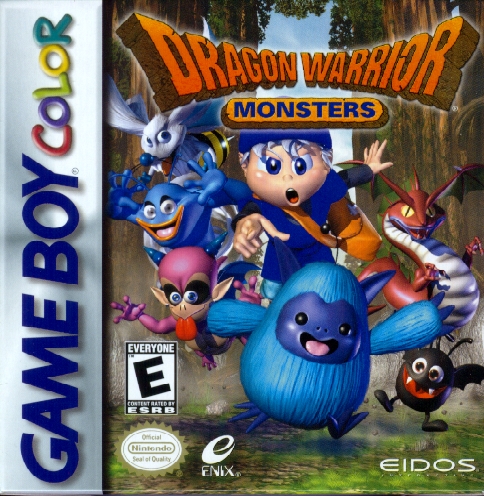
Retro Review: Dragon Warrior Monsters


Dragon Warrior Monsters (known as Dragon Quest Monsters in Japan) is the first game in the vastly expansive, and successful, Dragon Quest series. 


Released on the Game Boy Colour in 1998, Dragon Warrior Monsters follows the story of Terry, who has been forced into a quest in the magical land of Great Tree in order to save his kidnapped sister, Milly. Those who have played Dragon Quest VI will notice that this is the same Terry and Milly represented, but in this first game, they are small children. When Terry arrives in Great Tree, he is greeted by the King, who gives him his monster-a Slime called Slib (in a side-note, I kept Slib in my party and trained him right up until the end of the game. He never left my side-maybe it was those wide eyes and infectious grin of his?). With Slib at his side, the King tells Terry that if he wins the Monster Trainer's Starry Night Tournament, he is granted a wish. Knowing Milly's current predicament, I think we can all guess what Terry's wish would be right now. So, the player spends the entire game catching and training monsters, and traversing up the tournament ladder until they reach the final. 
Like most RPGs, Dragon Warrior Monsters relies heavily on the levelling-up system in order to progress further in the game. The game becomes increasingly difficult by the end, and the player will find themselves defeated more often than not if they do not train and level up their monsters, and assign them new skills. The monsters are not as overly cute as those in Pokemon, but each has a cartoonish, and interesting design nonetheless. 


Whilst it is true that Dragon Warrior Monsters shares follows the same game play as the Pokemon series, there are certain aspects that definitely set it apart. For instance, the breeding system is vastly complex. Not complex in a way that gamers would have difficulty understanding how to make their monsters breed, but in the sense that there are so many different choices during breeding. This means that many monsters will breed with almost any other, so players are never quite sure what breed will hatch out of the egg. For me, this was one of the most exciting parts of the game.
The breeding aspect may remain one of the most memorable aspects of the game, but what I also have fond memories of is the music (an adventurous, often cheerful sounding retro score), the huge variety of wild and wonderful monsters, and the large level of exploration involved. I have always been a huge fan of RPG's, and I find I am in my element if a game contains a huge amount of exploration, free-roaming and levelling up. Thankfully, Dragon Warrior Monsters contains all three of these aspects.


Overall, Dragon Warrior Monsters is an excellent game that combines a complex but significantly impressive breeding system, enjoyable RPG elements such as the exploration and item collecting sections, memorable music, and a satisfying story. Many people may dismiss this straight away as being a Pokemon copy, but I urge you to give it some credit-it is worthy of being classed as an excellent game. So excellent that it still remains one of my favourite games, even today. 

Friday, 18 November 2011

Retro Review: Toobin'


Many older games I have fond memories of span across the times when me and my brother would play a bunch of video games together. As a duo, we've played through a variety of games-many of which I can look back on fondly. Toobin' is one of those games.


Originally released in 1988 as an Atari arcade game, it has since been ported onto a number of systems, including the Nes, Game Boy Colour and Playstation. The game saw players taking control of Bif and Jet, two water-loving dudes who are relaxing upon one of those inflatable rubber donuts. The aim of the game was quite a simple one-navigate your chosen character down a number of different landscapes, whilst avoiding obstacles, collecting points and letters to spell "Toobin" and attempting to slow down the other player. Like any racing game, the first to make it across the finish line wins.
What I distinctly remember from Toobin' is the level designs. One minute you can be enjoying a bright jungle-like atmosphere (like the Amazon level), and suddenly, you'll seamlessly glide down a strong current into a rather sinister one (like Nightmare, and the River Styx). There are a total of 15 levels to race through, which unfortunately isn't too many, but then the game gets increasingly more difficult by the end, so you'll be playing them for a considerably long time.


As much as I love this game, there is no denying that negative aspects are evident. Firstly, the controls take a little getting used to. Biff and Jet are navigated through the water by merely pressing left and right repeatedly to build up a momentum. Whilst this may sound simple, it's definitely harder than it looks, resulting in what I feel is a somewhat clunky control system at times. Another problem is that the game play gets very samey rather quickly. Whilst this may not matter too much in multiplayer mode, there is definitely an element of tedium towards the end on single player. 


Overall, Toobin' is an enjoyable game which I have fond memories of completing as a kid with my brother. The graphics are bright and fun-looking, the enemies are  often quite scary (remember I mentioned the Nightmare and River Styx levels? That's where you'll find them), and it is a great game to play with another player. As the racing lane is rather tight, it is hard to overtake players for long before the other crashes into you, making this a pretty fun, competitive game. Sure, it may get a little repetitive and dull at times, but it's harmless fun and thankfully has considerable replay value.


Retro Review: Donkey Kong Country


Donkey Kong had only previously been known as the damsel-kidnapping ape in the 1981 video game of the same name. However, 1994 marked the release of Donkey Kong Country, a game which allowed this hulking ape to take on the protagonist role.


Released by Rare on the Super Nintendo, Donkey Kong Country allowed gamers to play through 40 side-scrolling platforming levels. Like many retro games, the premise was a simple one-navigate Donkey Kong through each level so that he can finally take back his stolen banana hoard from the Kremlings.
Side-scrollers can sometimes fall victim to repetitive game play, where players can find themselves repeatedly fighting the same styles of enemies, and nothing more. Thankfully, Donkey Kong Country avoids this issue by including a variety of objectives, such as mine-cart riding (my personal highlight), swinging from vines, launching Donkey Kong from barrels, swimming, riding on a host of crazy looking animals, and much more. These activities are only further enhanced by the welcome addition of multi-player functions, so you and a friend can work together to make it through each level. Players get to choose between playing Donkey Kong or his nephew, Diddy Kong. Both have different abilities, so it is up to you which you prefer, but personally, I have always felt that Donkey Kong was the stronger of the two, so defeating enemies was a lesser challenge than with the more weaker, but agile, Diddy.


What makes Donkey Kong Country so memorable, even in today's standards is the graphics adopted within the game. Back in 1994, Rare adopted some rather revolutionary pre-rendered 3D graphics, which resulted in an impressive and memorable look which had not been seen on the SNes previously. Coupled with a catchy and crisp soundtrack, it is evident that a lot of time and effort went into making this game. 
As for the negative points, in all honesty, there are not many. My only concerns is that the game can get rather challenging, especially if played on the single player mode. However, rope in a player who you know deals well with a tough challenge for the multi-player mode, and you should be able to sail through the game with less struggling points.


So, after all these years, is it still worth trying out Donkey Kong Country? My answer to that would be a solid yes. The game is full of exciting and well-designed levels that are enhanced when played with another player in one of the multi-player modes. The graphics for it's time definitely helped to make Donkey Kong Country stand out above the rest, and for this, I feel that it is worthy to be checked out. Donkey Kong Country Returns has since been released on the Nintendo Wii, but I suggest giving the original a go first before  launching yourself into this re-vamped version.
Related Posts Plugin for WordPress, Blogger...